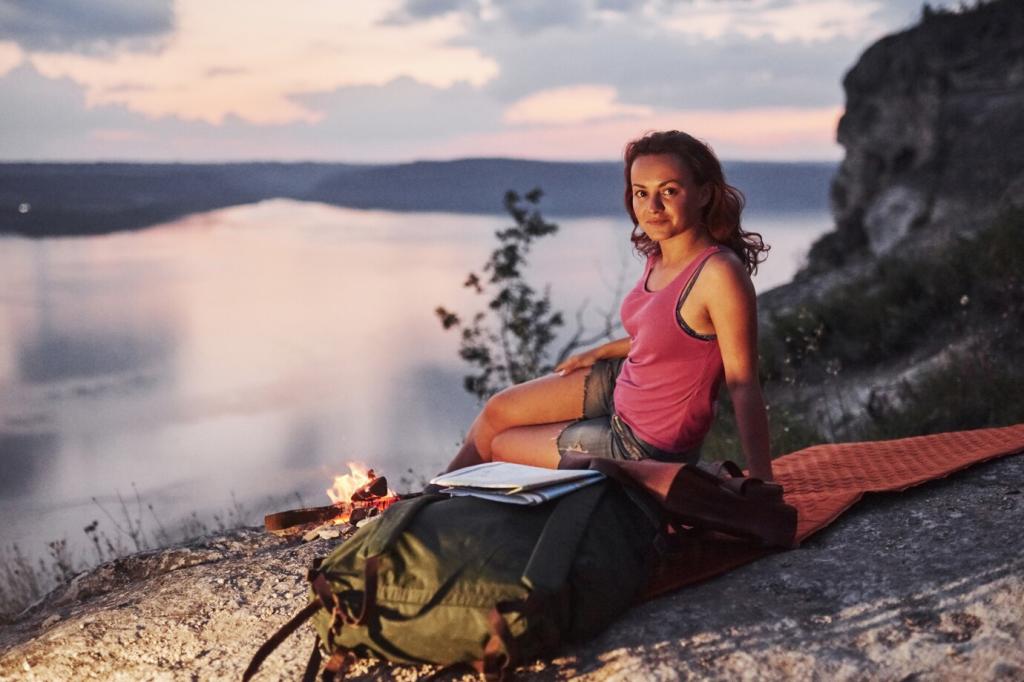
Today’s chosen theme: Mindful Breathing Techniques for Travelers. Welcome to a calm, clear way of moving through airports, stations, and new cities. Settle in, inhale ease, exhale hurry, and subscribe for weekly travel-ready breath practices that fit every itinerary.
A longer exhale can nudge the vagus nerve, easing your nervous system from fight-or-flight toward rest-and-digest. Gentle nasal breathing supports focus and steadier CO2 tolerance, helping you think clearly during gate changes, tight connections, and unexpected itinerary twists.
Why Breath Becomes Your Best Travel Companion
Good travel breathing starts with simple alignment: plant your feet, soften your jaw, un-hunch your shoulders, and imagine your ribs stacking over your hips. This steady frame opens space for fuller, quieter breaths, even in cramped seats or crowded platforms.
4-7-8 at cruising altitude
Gently inhale for four, hold for seven, exhale for eight, one to three rounds. Keep it light, never straining. Pair with a sip of water and a soft gaze at the horizon. Share whether you use this after takeoff, during cruise, or before landing.
If hands are occupied, visualize the airflow switching sides while you breathe slowly through your nose. The mental cue alone steadies attention. With a scarf or sleeve, you can subtly guide the breath without signaling. Tell us your favorite discreet adaptation.
Step into daylight, relax your shoulders, and take slow nasal inhales with steady, natural exhales for three to five minutes. Combine with sunlight on your face to signal “local morning.” It’s simple, safe, and surprisingly clarifying after overnight flights and early arrivals.
Choose silent, nasal breathing with invisible counts. Relax your jaw, soften your gaze, and let your exhale lengthen naturally. On a sleeper train, this quiet approach soothed me and my restless cabin neighbor. Share your favorite stealth technique for crowded, hushed environments.
Language cues you can whisper to yourself
Anchor words like “soften,” “steady,” or “arrive” can guide the breath without gestures. Whisper lightly if needed, or repeat mentally. These cues travel across borders. What single word steadies you when journeys get chaotic? Add yours to our growing traveler phrasebook.
Respect shared spaces
If a practice might distract seatmates, scale it down. Smile, breathe quietly, and keep movements minimal. Flight crews notice considerate calm. Your example may help the cabin relax. Subscribe for a printable checklist on considerate breathing in planes, lounges, and waiting rooms.
Build a Portable Breathing Habit
Link three breaths to travel anchors: boarding pass in hand, passport scan, seatbelt click, zipper pull. These moments recur reliably, training your nervous system to relax on cue. Tell us which travel anchor best reminds you to breathe without needing another reminder.